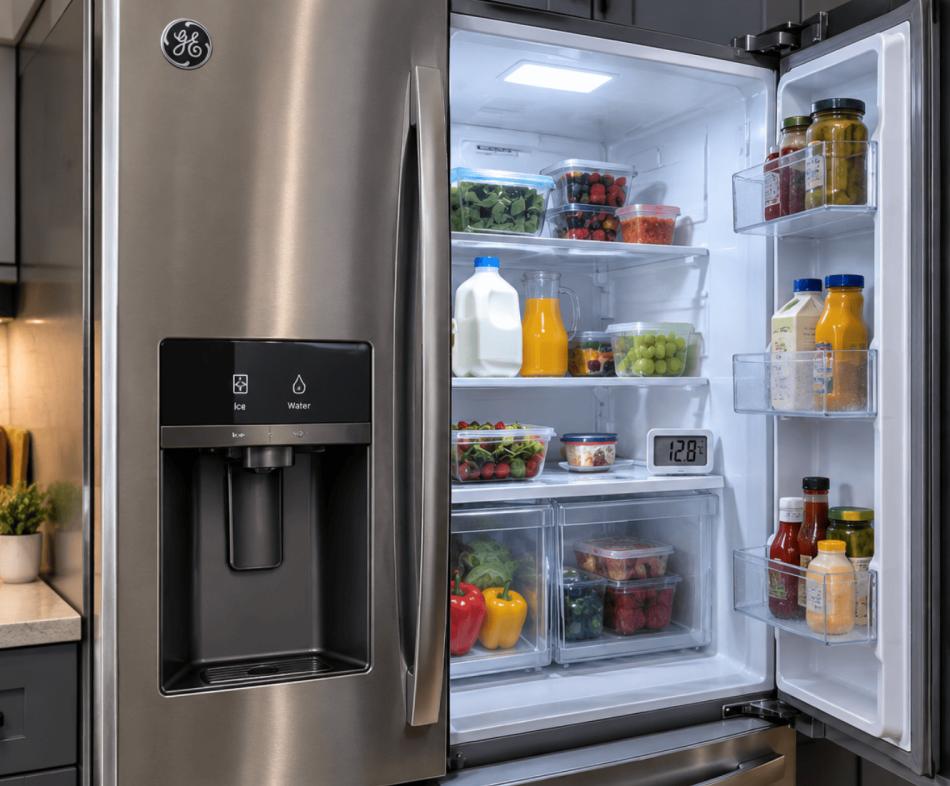
Opening the refrigerator door to find warm milk and soft butter is incredibly frustrating for any homeowner. A warm fridge usually means you are racing against time to prevent expensive food spoilage. When you first notice your GE refrigerator not cooling, it is completely natural to worry about the repair costs. However, finding the exact cause does not always require immediate panic or a massive budget.
While General Electric manufactures highly reliable household units, these hard-working machines will inevitably develop mechanical issues over years of constant use. The exact solution usually depends on a few specific operational clues. Whether the GE refrigerator not cooling but freezer is working perfectly, or the appliance is making unusual background noises, will guide your next steps.
Sometimes, a simple DIY adjustment can restore proper airflow and save your groceries. In other situations, you might need a professional refrigerator repair in Denver to resolve a complex failure securely. Knowing what to look for makes the entire troubleshooting process much easier.
Most Common Reasons a GE Fridge Stops Cooling
It is not the easiest task in the world to understand why exactly the GE fridge not cooling as it should be. For some people, it may feel like a challenge when they manage to balance their everyday job with finding a solution to this issue. When a general electric refrigerator not cooling and starts warming up, the possible reason for that is a failing mechanical part or restricted airflow.
Here are some of the typical reasons why the temperature is not at the expected level:
- Dirty condenser coils. When you have not cleaned the floor beneath the unit, dust, pet hair and other kind of pollute can result in heat accumulation.
- Faulty evaporator fan. This is the kind of fan that distributes cold air throughout the food section of the unit, which means it is critical to check if it works as intended. If not, your groceries are not safe.
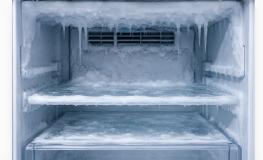
- Defrost system failure. When the defrost heater breaks, it leaves the internal cooling coils in ice.
- Worn door gasket. Heavy, humid room air can ruin the internal climate if it seeps inside constantly. This can happen when rubber seals are torn or loose.
- Bad start relay. While this switch looks small, it is the one responsible for sending power to the compressor, and when it fails, the cooling cycle never initiates.
- Stuck damper control. If this motorized vent jams shut, freezing air gets trapped inside the freezer compartment.
- Control board issue. The main electronic brain can malfunction, preventing signals from reaching the cooling hardware.
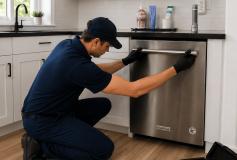
If you feel like something is wrong with your unit, schedule an expert GE appliance repair. You cannot handle all the problems on your own, especially when it comes to situations that require high-voltage internal component repairs. It can be done only by people with enough knowledge and experience, so they can do that without damage to the appliance itself.
Freezer Works But Fridge Is Warm — What This Means
A very specific and confusing situation arises when the freezer stays icy, but the fresh food section completely loses its chill. Discovering your GE refrigerator not cooling but freezer is working perfectly is a highly common scenario. You might grab a frozen solid ice cube, only to find unexpectedly warm beverages sitting right next door.
This particular pattern almost always points directly to a severe blockage in the internal air circulation system. Your appliance relies on a single shared cooling source located behind the rear freezer wall. It actively pushes chilled air from the back of the freezer directly into the fresh food compartment.
Therefore, when your GE refrigerator not cooling properly is isolated to one side, the mechanical damper control is often stuck closed. Alternatively, a burned-out evaporator fan motor might fail to push that necessary chill upward through the internal vents. Furthermore, massive frost buildup can physically choke the ventilation channels bridging the two sections.
Interestingly, symptoms like these are fairly universal across most major home appliance brands on the market. For instance, you will notice very similar airflow restrictions if you ever need to troubleshoot an LG refrigerator not cooling properly.
After a Power Outage: Why Your GE Fridge May Not Recover
Severe weather across Colorado can occasionally knock out the electrical grid without any warning whatsoever. Dealing with a GE fridge not cooling after power outage is an incredibly frequent issue for local homeowners. Sudden voltage spikes can easily scramble the main electronic control board or completely fry sensitive electrical relays.
When the electricity finally returns, your appliance might seem totally lifeless and unresponsive. In other cases, the internal lights might shine brightly while the compressor remains completely and suspiciously silent. If you find your GE fridge not getting cold immediately following a heavy storm, try executing a hard system reset first.
Simply unplug the heavy power cord from the wall outlet, wait for at least five full minutes, and carefully restore the power. Always check the digital display settings to ensure they did not default to a demo mode. If your GE refrigerator not cooling persists despite the reset, the power surge likely ruined the start relay. Both the relay and control board will require fresh replacement parts.
That Clicking Sound — What It's Telling You
There are cases when major home appliances start to fail by producing strange sounds you cannot ignore. If you hear GE refrigerator clicking sound not cooling the interior, it is already a sign that something is going wrong. You may realize it is the repetitive, rhythmic clicking noise, which originates from a struggling start relay positioned down near the compressor.
The start relay attempts to send a voltage boost to jump-start the compressor, fails, and shuts off rapidly. When your GE fridge not getting cold and makes this specific sound, you must solve the problem fast to make sure the unit does not get damaged even more. If caught early, swapping out the inexpensive relay assembly will restore functionality.
Ignoring these sounds is a bad idea because clicking puts a sustained strain on the main compressor itself. A burned-out compressor is one of the most expensive appliance repairs possible today. Unplug the machine if your GE refrigerator stopped cooling and starts clicking to protect the internal motor.
Step-by-Step Troubleshooting You Can Do at Home
Before contacting professionals for help, it is always a good idea to complete a basic check to find out what has happened. Sometimes, a GE refrigerator not cooling is caused by something simple, like a blocked internal vent. Grab a good flashlight, clear some space around the kitchen, and walk through these steps:
- Check temperature settings. Make sure the manual dials or digital displays are actually set to the recommended 37 degrees Fahrenheit.
- Clean condenser coils. Pull the heavy machine forward and thoroughly vacuum the thick layer of dust off the bottom coils.
- Listen for fan motors. Open the freezer door and listen closely; you should hear the internal evaporator fan humming.
- Inspect door gaskets. Run your hand along the rubber seal to feel for any cold air actively escaping.
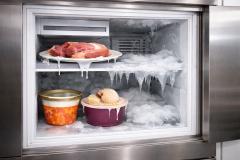
- Check for frost buildup. Look at the back wall of the freezer for thick sheets of ice, indicating a defrost issue.
- Unplug and reset. Disconnect the power for a few minutes to clear minor software glitches on the board.
- Shake the start relay. If you are comfortable, detach the relay. If it rattles, it needs replacing.
If it all fails to fix a General Electric refrigerator not cooling, the underlying issue lies much deeper. For problems that require a deeper mechanical dive, professional help is required.
When It's Time to Call a Technician in Denver Metro
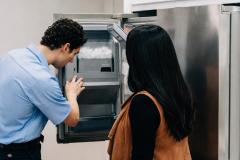
DIY troubleshooting has strict limits, especially when dealing with dangerous electrical currents and specialized chemical refrigerants. If your GE refrigerator stopped cooling and a basic system reset did not help at all, do not wait days for a miracle. A unit remaining completely warm for over 24 hours, persistent clicking noises, or a dead compressor requires immediate professional intervention.
Delaying service only guarantees that your food will spoil and that your GE fridge not cooling could develop secondary mechanical damage. This is exactly where our team at High City Appliance steps in to save the day. We provide fast, highly reliable appliance repair in Denver Metro, deploying fully licensed technicians directly to your doorstep.
We carry the most common replacement parts in our service vehicles to ensure same-day service whenever possible. Whether you need help right in the city center or require Aurora appliance repair, our dispatch team has you completely covered. Our service area extends widely to support households throughout Colorado.
In many cases, scheduling a GE fridge not cooling repair service in Lakewood, Littleton, Boulder, or Castle Rock guarantees a prompt response. Do not let another batch of expensive groceries end up in the trash bin. Contact our local team today, and let an experienced professional restore your kitchen's most critical appliance to perfect working order.